
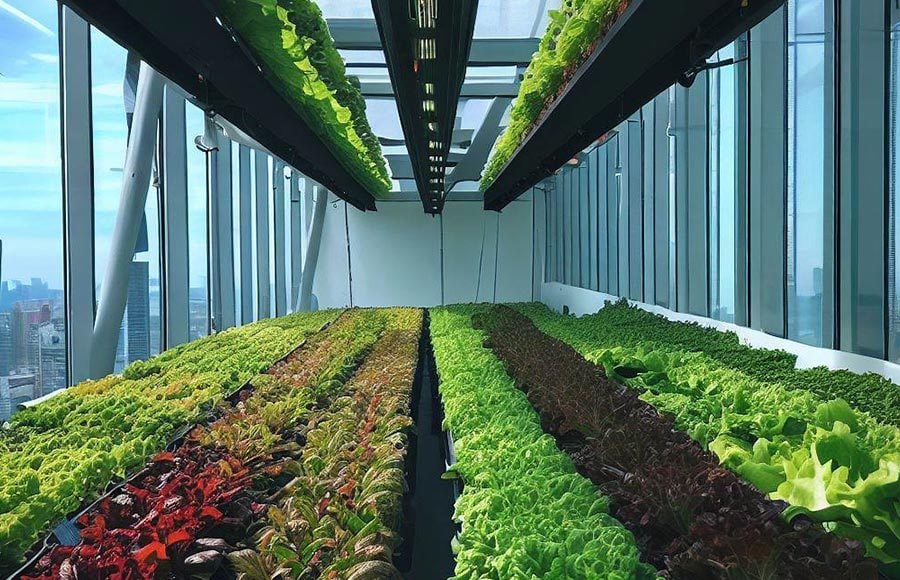
As urbanization accelerates globally, cities face growing challenges in ensuring food security, environmental sustainability, and efficient resource utilization. Urban agriculture and vertical farming have emerged as innovative solutions to address these challenges. By integrating food production into urban environments, these practices offer a sustainable pathway to feed growing urban populations while minimizing the environmental footprint.
Urban Agriculture: Redefining Food Systems in Cities
Urban agriculture refers to the practice of growing, processing, and distributing food within urban and peri-urban areas. This approach transforms underutilized spaces such as rooftops, vacant lots, and community gardens into productive agricultural hubs. Urban agriculture promotes localized food systems, reducing reliance on long-distance supply chains and fostering community engagement.
Vertical Farming: Farming Upward, Not Outward
Vertical farming is a revolutionary approach to agriculture that involves growing crops in stacked layers or vertically inclined surfaces, often in controlled indoor environments. Using technologies like hydroponics, aeroponics, and aquaponics, vertical farming maximizes productivity while minimizing land use.
Key characteristics of vertical farming include:
- Efficient Land Use: Utilizing minimal space by growing crops vertically.
- Controlled Environments: Relying on artificial lighting, climate control, and automation for year-round production.
- Water Efficiency: Using closed-loop systems to recycle water, reducing consumption by up to 95% compared to traditional farming.
- Reduced Transportation Costs: Producing food close to urban consumers, lowering carbon emissions.
Benefits of Urban Agriculture and Vertical Farming
- Enhanced Food Security
- Localized food production reduces dependence on external supply chains, enhancing resilience to disruptions.
- Sustainable Resource Use
- Vertical farming and hydroponic systems drastically reduce water and land requirements.
- Urban agriculture repurposes otherwise unused urban spaces for productive purposes.
- Environmental Impact Reduction
- Cutting transportation distances reduces greenhouse gas emissions.
- Urban green spaces mitigate the urban heat island effect and improve air quality.
- Economic Opportunities
- Urban agriculture creates jobs in farming, logistics, and retail within cities.
- Entrepreneurs benefit from innovative business models, such as subscription-based fresh produce delivery.
- Community and Social Benefits
- Community gardens and urban farms foster social cohesion, education, and awareness about sustainable food systems.
- Access to fresh produce improves urban diets and overall health.
Technologies Driving Vertical Farming
- Hydroponics
- Growing plants without soil by delivering nutrient-rich water directly to roots.
- Aeroponics
- Plants are grown with roots suspended in air and misted with nutrient solutions.
- Aquaponics
- Integrating fish farming with hydroponics, where fish waste provides nutrients for plants, and plants purify the water for fish.
- Artificial Lighting
- LED grow lights simulate sunlight, providing optimal wavelengths for plant growth.
- Automation and AI
- Automated systems monitor and adjust environmental factors, such as temperature, humidity, and light, for optimal growth.
Challenges and Limitations
- High Initial Investment
- Vertical farming requires significant capital for setup, including infrastructure, technology, and energy systems.
- Energy Consumption
- Dependence on artificial lighting and climate control can result in high energy use, raising concerns about sustainability.
- Skill and Knowledge Gap
- Urban farming and vertical farming demand specialized expertise in technology, biology, and environmental science.
- Policy and Regulatory Barriers
- Zoning laws and regulations in some cities may hinder the adoption of urban farming practices.
- Scalability
- While effective in small-scale urban settings, vertical farming faces challenges in scaling up to meet broader food demands.
Global Examples of Success
- Singapore
- As a land-scarce nation, Singapore has invested heavily in vertical farming technologies, such as the high-tech Sky Greens vertical farm.
- United States
- Urban farms like Brooklyn Grange in New York City utilize rooftops to grow vegetables and herbs for local markets and restaurants.
- Japan
- Companies like Spread operate fully automated vertical farms, producing lettuce efficiently year-round.
- Netherlands
- Pioneering agricultural innovation, the Netherlands has developed urban farming solutions integrated with renewable energy systems.
Future of Urban Agriculture and Vertical Farming
The future of urban agriculture and vertical farming is promising, with advancements in technology driving increased efficiency and affordability. Key trends include:
- Integration with Smart Cities: Urban farms will increasingly become part of smart city initiatives, utilizing IoT and AI for seamless management.
- Energy Innovations: Solar panels and energy-efficient LEDs will address the high energy demands of vertical farms.
- Policy Support: Governments are beginning to incentivize urban farming through grants, tax breaks, and supportive zoning policies.
- Consumer Engagement: Direct-to-consumer models, such as subscription boxes and urban farm markets, will grow in popularity.
Conclusion
Urban agriculture and vertical farming represent transformative approaches to sustainable urban living. By rethinking how and where food is produced, these innovations address the dual challenges of feeding a growing urban population and mitigating the environmental impacts of traditional agriculture.
While challenges such as cost and energy use remain, continued technological advancements and policy support will enable these practices to thrive. As cities strive to become more sustainable and resilient, urban agriculture and vertical farming will play an essential role in shaping the future of food production.











0 Comments
Login to add a review